Piano Sheets > Miles Davis Sheet Music > All Blues (ver. 2) Piano Sheet

All Blues (ver. 2) by Miles Davis - Piano Sheets and Free Sheet Music

  
About the Song
   Other avaliable versions of this music sheet: Version 1  Version 2  
"All Blues" is a jazz composition by Miles Davis first appearing on the influential 1959 album Kind of Blue. It is a 12 bar blues in 6/8; the chord sequence is that of a basic blues and made up entirely of 7th chords, with a bVI in the turnaround instead of just the usual V chord. In the song's original key of G this chord is an Eb7. [1] The piece is made even more distinctive by the bass vamp that repeats through the whole piece, except when a V or bVI chord is reached (the 9th and 10th bars of a chorus). Further to this, there is a harmonically similar vamp that is played by the horns (the two saxophones in the case of Kind of Blue) at the beginning and then (usually) continued by the piano under any solos that take place. Each chorus is usually separated by a four-bar vamp which acts as an introduction to the next solo/chorus. While originally an instrumental piece and usually performed as.    Download this sheet!
About the Artist
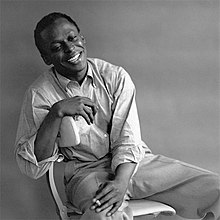
Miles Dewey Davis III (May 26, 1926 – September 28, 1991) was an American jazz trumpeter, bandleader, and composer. Widely considered one of the most influential musicians of the 20th century, Davis was at the forefront of almost every major development in jazz from World War II to the 1990s: he played on various early bebop records and recorded one of the first cool jazz records; he was partially responsible for the development of hard bop and modal jazz, and both jazz-funk and jazz fusion arose from his work with other musicians in the late 1960s and early 1970s; and his final album blended jazz and rap. Many leading jazz musicians made their names in Davis' groups, including: Joe Zawinul, Chick Corea and Herbie Hancock, saxophonists John Coltrane, Julian "Cannonball" Adderley, Gerry Mulligan, Wayne Shorter, George Coleman, pianist Keith Jarrett, and Kenny Garrett, drummer Tony Williams and guitarist John McLaughlin. As a trumpeter, Davis had a pure, round sound but also an unusual freedom of articulation and pitch. He was known for favoring a low register and for a minimalist playing style, but was also capable of highly complex and.
Random article
How to enhance sight-reading for piano sheet music If you want to learn how to play, the piano in a live performance impromptu then you need to improve your sight-reading of sheet music. Chances are you will have to play music notes, which are unfamiliar. Picking it at random One of the best ways to enhance your sight-reading of piano notes is to pick any book randomly and start playing. Ideally, you want to start playing these musical notes from the first page and continue until you reach the very end. The trick is to be stern with yourself and not stop playing until you reach the last page of the sheet music.  (More...)